
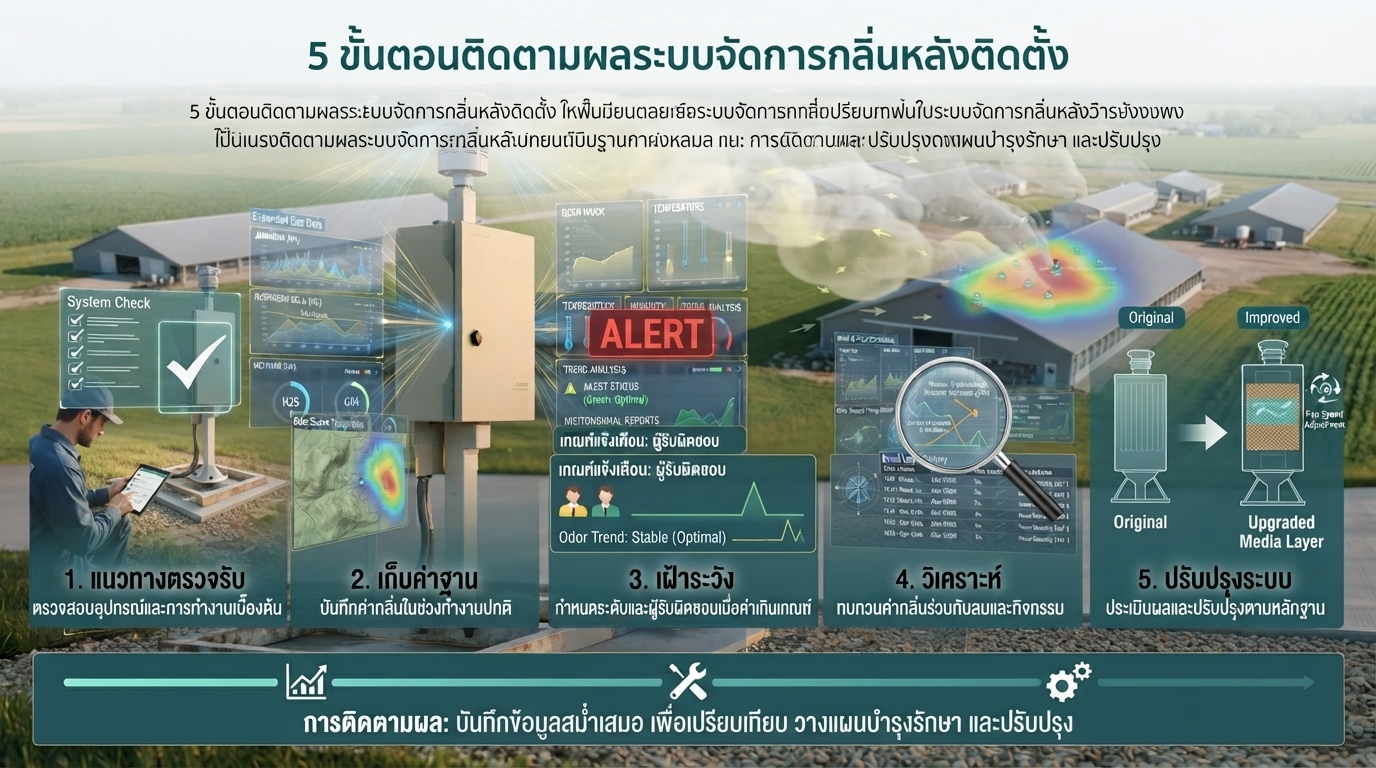
Handover is not the end of an odor project. Animal load, wastewater strength, seasons, and equipment condition keep changing.
1. Establish a comparable baseline
Record location, time, animal population, wastewater flow, wind, and key activities before and after installation.
2. Commission the complete system
- Verify airflow, pressure, and flow direction
- Test interlocks, alarms, and emergency modes
- Check pumps and bubble distribution
- Sample before and after treatment points
- Train operators and hand over daily checks
3. Monitor odor with wind and data quality
Source and receptor sensors help identify event timing, but interpretation must include wind, operating logs, and sensor health.
4. Turn alerts into action
| Stage | Example action |
|---|---|
| Watch | Review wind, trend, and equipment |
| Abnormal | Inspect risk points and reduce odor-generating activity |
| Persistent | Activate response plan and collect evidence |
| Review | Identify cause and track corrective action |
5. Review KPIs and maintenance
Track odor, equipment availability, alerts, response time, energy, and overdue maintenance. Every report should name the next action, owner, and deadline.
Takeaway
RE-Solve Monitor & Care combines system health checks, sensor calibration, event review, and periodic recommendations.